01About the word
This is an opinion piece, and the word in the headline is a choice. Historians argue about whether fascism is the right label for what is happening in the United States, or whether authoritarianism or competitive authoritarianism fits better. The historian Robert Paxton, who spent decades studying fascism, has described it less as a fixed ideology than as a pattern of behavior. We think the pattern is the point, whatever you name it.
02The warning signs, on the record
- Treating term limits as negotiable. In March 2025 the president said he was not joking about a third term and that there are methods to do it. Steve Bannon has said there is a plan. More recently the president has said the law is very strong.
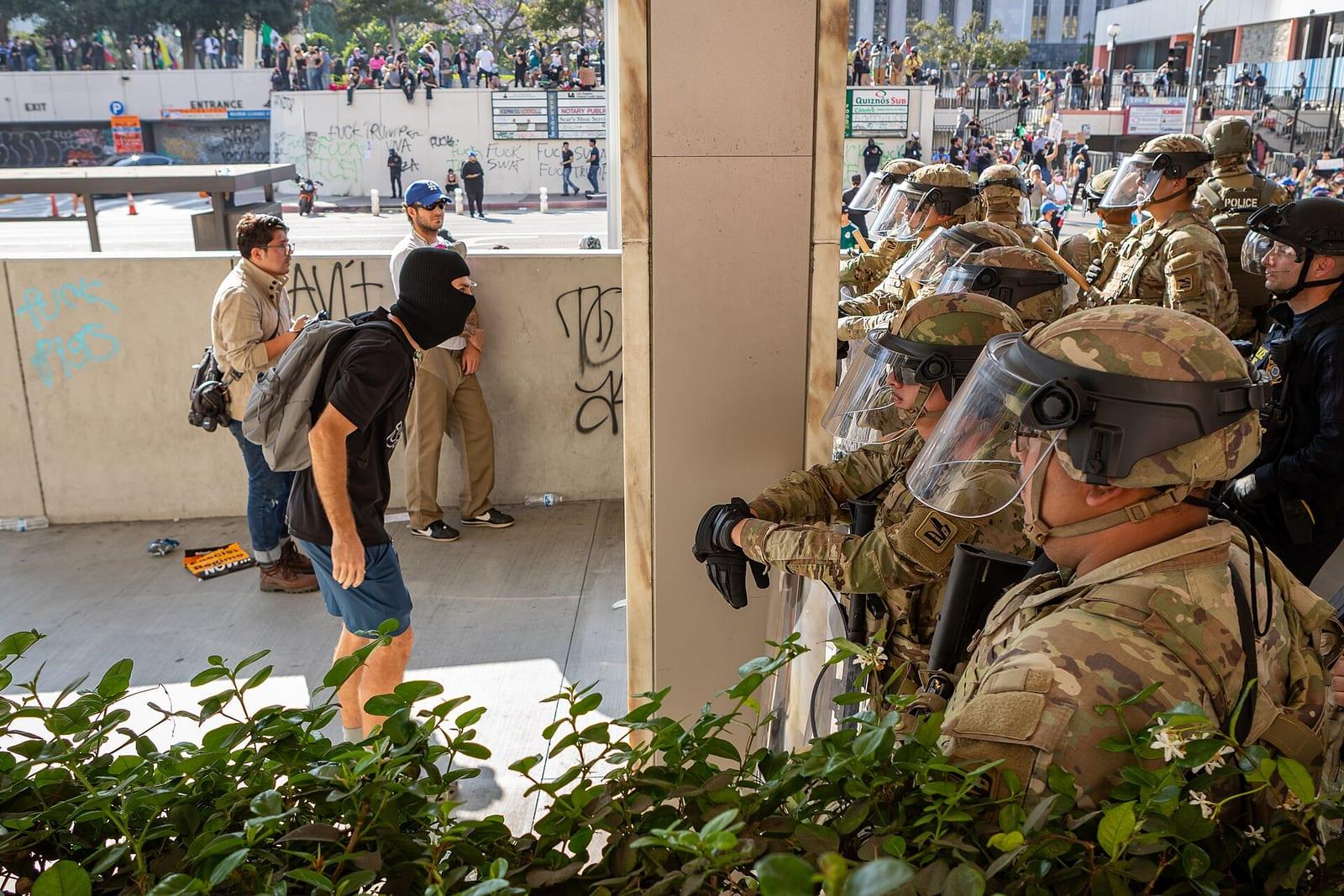
- Using troops at home. National Guard troops were deployed to Los Angeles, with deployments pushed toward Chicago and Portland, prompting lawsuits and a federal judge blocking one of them.
- Punishing critics through the justice system. Indictments of James Comey and Letitia James were thrown out after a judge found the prosecutor unlawfully appointed.
- Dehumanizing a scapegoated group. Immigrant detention has expanded rapidly, and advocates documented six deaths in ICE custody and two fatal shootings in the first weeks of 2026 alone.
- Making war without consent. Operations in Venezuela and Iran went forward without congressional authorization.
- Rewriting the rules of elections. Executive orders on voter citizenship verification, a push to restrict mail voting, and mid-decade redistricting all target how votes are cast and counted.
None of these alone ends a democracy. Together, and sustained, they are the pattern scholars warn about: power concentrated in one person, checks treated as obstacles, and opponents treated as enemies.
03The guardrails are working, sometimes
The story is not only decline. Courts struck down the president's emergency tariffs. A judge threw out the politically charged prosecutions of Comey and James. Judges blocked key parts of an earlier executive order on voter registration and blocked a Guard deployment. Voters in California answered a partisan map with one of their own. A Republican congressman forced his party to confront an impeachment resolution over an unauthorized war.
Guardrails bend. They also hold when people lean on them. That is the lesson of every democracy that has pulled back from the edge.
04How it ends
Authoritarian movements rarely end with a single dramatic moment. They end when the coalition supporting them fractures, when institutions refuse to cooperate, and when the public makes resistance normal rather than risky. In practice, that looks like:
- Elections that restore a real check. A Congress willing to subpoena, defund abuses, and vote on war.
- States that hold the line. Governors, attorneys general, and secretaries of state who protect elections and sue when rights are violated.
- Courts that enforce the law, and a public that expects rulings to be obeyed.
- Mass nonviolent participation. Research on civil resistance consistently finds that nonviolent movements succeed more often than violent ones.
- A free press and whistleblowers who keep the record honest.
- Accountability after the fact, through lawful investigations and independent prosecutors, so the next would-be strongman knows the bill comes due.
05No savior is coming. That is good news.
Waiting for one indictment, one court case, or one candidate to fix this is how people burn out. Democracy is a system, and systems are defended by lots of people doing unglamorous work: registering voters, working the polls, calling representatives, showing up at school board meetings, and reminding friends to vote.
The first real test is November 3. Not because one election solves everything, but because it decides whether the next two years are spent rebuilding the guardrails or watching them get torn out.
Opinion and analysis from the Feed After Midnight editorial desk. Facts, figures, and quotes are drawn from the reporting listed in the sources below and reflect what was known on the publish date.
Frequently asked questions
Scholars disagree about the label. Some use fascism, others prefer authoritarianism or competitive authoritarianism. Most agree the warning signs include concentrating power, attacking independent institutions, targeting opponents, and undermining elections.
- 01Britannica: No Kings protests
- 02PBS News: Trump says it's too bad he can't run for a third term
- 03American Immigration Council: Deaths in ICE custody and fatal shootings in early 2026
- 04CBS News: National Guard deployment in Chicago and Portland
- 05Wikipedia: Election law and voting rights under the second Trump administration