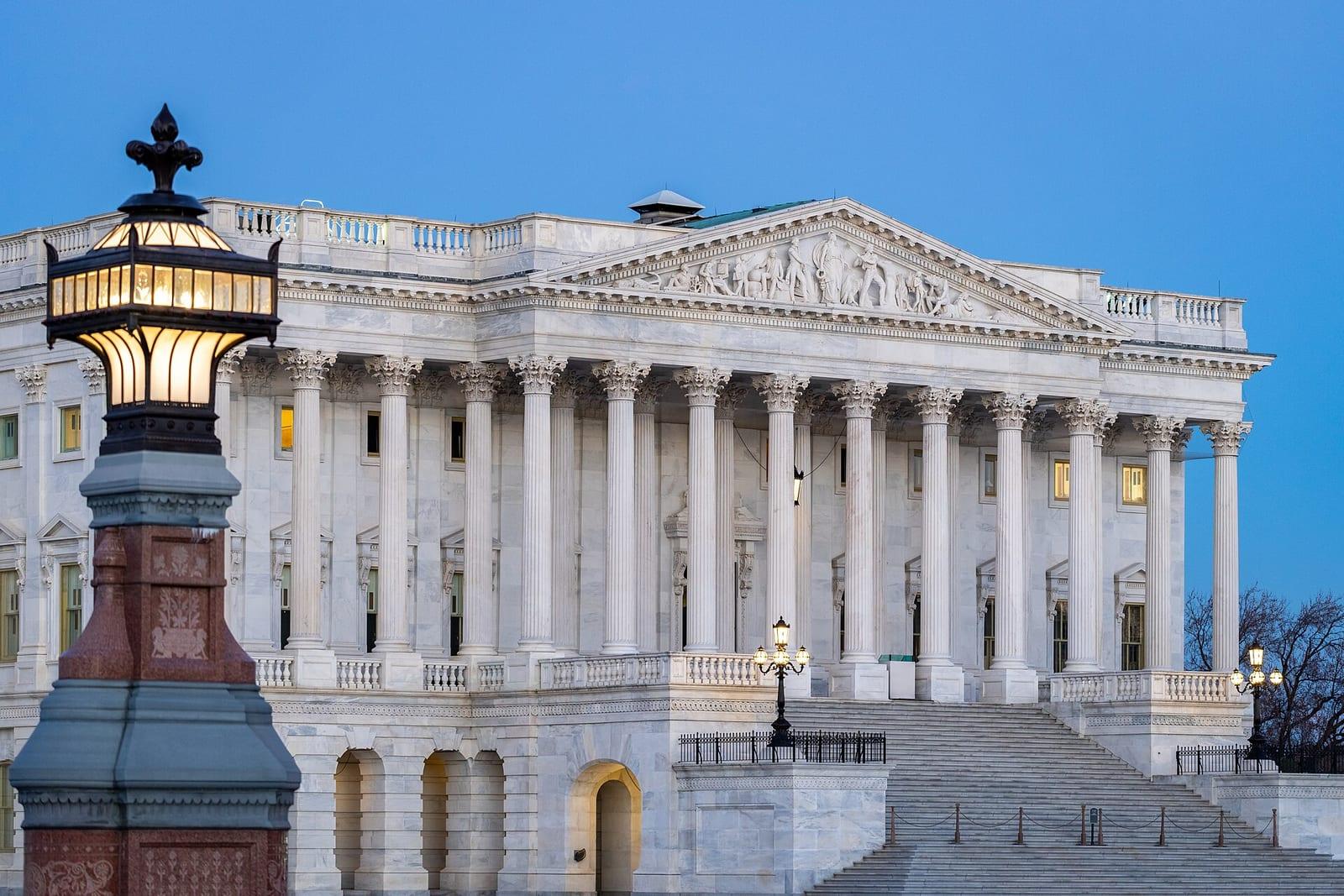
01The math: four seats, no margin
Republicans hold the Senate 53 to 47. Democrats are defending far fewer seats this cycle than Republicans, but many GOP incumbents sit in states the president carried comfortably in 2024. That means the path to 51 runs through a short list of competitive states, and Democrats have to hold everything they already have while flipping four.
Why the Senate matters on its own: it confirms judges and cabinet officials, ratifies treaties, and tries impeachments. A Democratic House without a Senate can investigate. A Democratic House with a Senate can also block nominees and force floor votes on war powers and ethics legislation.
02North Carolina: Cooper's race to lose
Former Governor Roy Cooper is running for the open seat against Republican Michael Whatley, the former Republican National Committee chair. An Elon University poll in August showed Cooper ahead 53 to 42 among likely voters. The race is expected to be the most expensive Senate contest in the country.
The catch: North Carolina has not elected a Democrat to the Senate since 2008. Cooper has won statewide repeatedly, but federal races there have broken late toward Republicans before. A double digit summer lead is a head start, not a finish line.
03Maine: Collins faces her toughest numbers yet
Senator Susan Collins is seeking a sixth term against Democrat Troy Jackson, the former state Senate president and onetime logger who became the nominee after Graham Platner exited the race late in the cycle. Several polls, including one from the University of New Hampshire, have shown Jackson narrowly ahead.
The catch: polls have underestimated Collins before, most famously in 2020. Her argument is independence. Jackson's argument is that her votes, from confirmations to budget deals, have not matched the independence she describes.
04Ohio: Sherrod Brown's comeback
Former Senator Sherrod Brown, who lost his seat in 2024, is running in the special election against appointed Republican Senator Jon Husted. Brown built his career on labor and pocketbook politics, a message that tests well in a year dominated by prices, tariffs, and rising interest rates.
The catch: Ohio has moved steadily right in the Trump era. Brown has to win back working class voters who split their tickets for him in the past but have since stopped doing so.
05The reach states
Beyond the big three, Democrats are investing in Texas, where a bruising Republican primary left scars, and are watching a handful of other Republican held seats that forecasters rate as competitive. None of these is favored for Democrats today, but in a wave year, reach states are where majorities get padded.
- Hold every Democratic seat, including competitive open seats.
- Flip North Carolina, Maine, and Ohio.
- Win at least one reach state to reach 51, since Democrats need a net gain of four.
06How to help if you do not live in these states
- Phone bank and text bank remotely through campaign and party volunteer portals.
- Give small dollar donations early; October money buys worse ad rates than September money.
- Talk to friends and family who live in these states. Personal outreach beats a mailer every time.
Opinion and analysis from the Feed After Midnight editorial desk. Facts, figures, and quotes are drawn from the reporting listed in the sources below and reflect what was known on the publish date.
Frequently asked questions
A net gain of four. The Senate is currently 53 Republicans to 47 Democrats, and the vice president breaks 50 to 50 ties, so Democrats need 51 seats.